How to check your city before buying chickens
Sometimes the answer is yes, with conditions. A city might allow a few hens but no rooster, require a permit, or leave too little legal space for your intended coop. Start with the property, then work outward through the rules.
- Confirm who governs your address. Find the parcel on the official city or county map. Record the parcel number, municipal boundary, and zoning district. A postal city or ZIP code is a starting point for a search, not proof of which rules apply.
- Read both the animal code and the zoning code. Search for chicken, hen, rooster, poultry, fowl, livestock, urban agriculture, and accessory use. Follow links from the government website to its code publisher. Check the effective date and any adopted amendments.
- Write down every condition. Record the bird limit, minimum lot size, eligible property type, rooster rule, required distances, and permit process. Check whether the limit counts chicks, roosters, ducks, or other poultry together. Read rules for manure, odor, flies, feed storage, and noise too.
- Ask the offices that approve the plan. Planning or zoning can confirm land use and placement; animal control or public health may handle poultry permits; the building department handles structure questions. Request a written answer with the relevant code sections. Use the worksheet's request as a starting point.
A real example: Chandler, Arizona (opens in a new tab), allows up to five chickens on detached single-family lots, prohibits roosters, and regulates coop placement. Its page also identifies separate building-permit triggers, including utilities. Those are separate questions even in a city that allows hens.
For more detail on records to save, private restrictions, and activities such as selling eggs, use our address-by-address legality guide. Our five city guides provide further examples with official source links.
What zoning means for a backyard flock
Zoning divides land into districts and sets rules for its use and development. The map tells you the district; the written code tells you what that designation permits. For example, New York City's zoning system (opens in a new tab) combines maps with written rules for residence, commercial, and manufacturing districts. Your town will have its own categories and definitions.
| Term you may see | What to check |
|---|---|
| Residential | Look for a backyard-hen exception or accessory-use allowance. A residential label alone does not settle the question. |
| Agricultural or rural | Check the actual poultry use, density, setbacks, and nuisance rules. A large or rural-looking lot is not automatic approval. |
| Accessory use / structure | Ask whether keeping hens is allowed alongside the home, and which separate rules apply to the coop and run. |
| Overlay / special district | Ask planning staff whether an additional mapped district changes the permitted use or construction requirements. |
A setback is a required separation from a specified feature, such as a property line or another home. Measure from the point the code names. A coop wall, run fence, and roof edge may produce different measurements. Draw the legal footprint before choosing a kit.
San Diego's chicken rules (opens in a new tab) show why this matters: permitted flock size changes with placement, and roosters are prohibited. A headline maximum says little about what fits on one particular lot.
Common catches, even when hens are allowed
Hens allowed, roosters prohibited
You do not need a rooster for eggs. University of Minnesota Extension (opens in a new tab) explains that males are needed for fertile eggs. If roosters are prohibited, ask a supplier about sexed pullets and its policy if a bird turns out to be male. Arrange a lawful rehoming option before buying.
The city says yes; the lease or HOA may not
Read the lease, recorded covenants, and architectural rules, and obtain any required owner approval. Chandler explicitly directs residents to check their HOA. The effect of private restrictions and any state-law limits depends on where you live; a city allowance does not answer that question by itself.
Permission for birds is not permission to build
A small shed can be exempt from one permit and still need to meet zoning rules. A poultry approval may not cover wiring, water connections, a tall run, or a larger outbuilding. Get the proposed design checked before ordering materials.
Noise and cleanup remain your job
Hens make noise too. Keep birds contained, prevent feed spills, and plan where manure goes. Check the required cleanup schedule rather than assuming an occasional deep clean is enough. Our rodent-prevention guide covers the feed and shelter problems worth addressing from day one.
Minimum starting space for healthy chickens
For adult standard-size chickens with daily run access, this planner uses 4 square feet of usable indoor floor plus 10 square feet of outdoor run per bird. That uses the upper end of the 3 to 4 square feet indoors and the 10 square feet of exercise yard in University of New Hampshire Extension's guidance (opens in a new tab).
These are starting allowances, not a guarantee that a flock will thrive. Guidance varies by housing system and bird size. Provide more room for large breeds, persistent mud, bullying, or long periods of confinement. A bigger run does not replace enough indoor space, and a higher local requirement still controls.
| Hens | Coop floor | Run | Roost | Nest boxes |
|---|---|---|---|---|
| 3 | 12 sq ft | 30 sq ft | 3 linear ft | 2 |
| 4 | 16 sq ft | 40 sq ft | 4 linear ft | 2 |
| 6 | 24 sq ft | 60 sq ft | 6 linear ft | 2 |
| 8 | 32 sq ft | 80 sq ft | 8 linear ft | 2 |
We budget 1 linear foot of roost per bird as a planning allowance. Use perches that suit the birds' size and mobility, with safe access and room for all to settle. The nest-box calculation uses one box per four hens, rounded up, with at least two: Minnesota Extension (opens in a new tab) suggests one per four to five birds, and the RSPCA's pet-hen guidance (opens in a new tab) recommends a minimum of two.
Measure the interior after allowing for fixtures that occupy floor space. A 4-by-4-foot clear floor is 16 square feet; the outside footprint of a coop-and-run bundle is not its indoor floor area. Leave additional room to reach every corner for cleaning.
What happy, healthy hens need beyond floor space
- Company and things to do. The RSPCA recommends a compatible group of at least three hens. Provide dry material for dust bathing, space to scratch and forage, shade, and places to move away from other birds. Watch whether timid hens can reach resources.
- Fresh water and a balanced ration. Keep clean water available and choose a complete feed for the birds' age and production stage. Minnesota Extension identifies prepared balanced feed and continual water access as core needs. Use our feeding guide when choosing a ration.
- Dry shelter with fresh air. Site the coop on well-drained ground, protect bedding from rain, and keep ventilation working without a direct cold draft on resting birds. Plan shade and water access for hot weather; our summer care guide covers heat planning.
- A secure enclosure. Inspect doors, vents, seams, the floor, and the run roof. Use suitable mesh and a digging barrier, and secure birds at night. University of Maryland Extension (opens in a new tab) explains why checking openings and the ground boundary matters.
- A reliable daily carer. Check the birds, water, feed, and enclosure every day, remove wet or dirty bedding as needed, and arrange cover for travel. Know which local vet sees poultry before an illness or injury. A timer, camera, or automatic feeder still needs someone checking the flock.
- Handwashing and clean habits. Wash with soap and water after contact with birds or their surroundings. Keep poultry and their equipment out of food-preparation areas. The CDC advises that children under five should not handle poultry (opens in a new tab), even birds that look healthy.
Care references: RSPCA pet-hen welfare (opens in a new tab), Minnesota Extension flock care (opens in a new tab), and UNH housing guidance (opens in a new tab). The RSPCA reference informs welfare advice here; its UK legal rules are not U.S. law.
Where to buy a coop, or start a build
Choose the legal footprint and flock size first. Then compare usable indoor floor, run area, access, weather protection, and the delivered cost. These are places to start based on current supplier documentation, not hands-on whole-coop reviews.
A permanent wooden coop: Carolina Coops
The American Coop (opens in a new tab) pairs a wooden hen house with a covered walk-in run. The current listing says it arrives unpainted and unassembled. Get a quote that includes freight, site preparation, finish, and assembly.
Check the hen house, not just the total footprint. The listed 6-foot-wide versions have a nominal 4-by-6-foot hen house. At this planner's allowance, 24 square feet starts at six birds before subtracting unusable floor space; the run and local cap may reduce that further.
A molded coop system: Omlet
Compare the Eglu Pro and its run options (opens in a new tab) if removable cleaning parts and an integrated system appeal to you. Check the internal dimension diagrams, ladder access, and the exact run package.
Treat advertised bird capacity as the manufacturer's estimate. Compare the usable sleeping floor and run separately with your chosen allowances; a longer attached run does not enlarge the hen house.
Build from a plan: UT Extension's archive
The University of Tennessee Extension plan file (opens in a new tab) is a free starting point for building and poultry plans. These are planning references, and the archive does not supply extra materials lists for individual designs. Older drawings need review for current local requirements and your site.
Have a competent builder or designer check the foundation, anchoring, roof loads, and connection details. Budget lumber, roof materials, mesh, hardware, delivery, tools, finish, and your time before deciding that DIY costs less.
Have a local builder quote your plan
A carpenter or shed builder can price a coop around your site sketch. Give them usable indoor and run areas, ventilation and predator requirements, cleanout access, and the required setbacks. Request a written specification so you can compare bids on the same work.
If shopping a farm store or used-coop listing, bring a tape measure and the same checklist. Count necessary repairs, transport, run extensions, and cleaning in the cost. A low sticker price is only useful if the finished enclosure fits the birds and the site.
Before you order or start cutting lumber
- Get the legal use and placement confirmed, with required permits in hand.
- Mark the site, including setbacks, drainage, cleaning access, and any delivery route.
- Measure usable floor and run space separately. Check doors, nests, and roosts against the actual breeds you plan to keep.
- Specify ventilation, weather protection, secure mesh, locks, and a suitable ground barrier before comparing quotes.
- Plan food and bedding storage, manure handling, and daily water access. Have permanent electrical work assessed by a qualified installer.
- Finish the enclosure and any inspection before birds arrive. Walk through a normal morning, evening, and full cleanout to spot problems.
Once the enclosure works, choose compatible automatic doors, feeders, or cameras to help with your routine.
Frequently asked questions
Can I have backyard chickens where I live?
Can I keep hens without a rooster?
Does residential zoning mean chickens are banned?
Does a small chicken coop need a building permit?
How much room should I plan for four chickens?
Can I trust the number of chickens on a coop listing?
Sources and review notes
Official city pages, university extension guidance, animal-welfare guidance, and supplier pages checked September 9, 2026. Local examples illustrate the checking process; they are not rules for other places. Rules, designs, and availability can change.
- Chandler chicken ordinance
- San Diego chicken regulations
- NYC zoning maps and text
- UNH housing and space guidance
- Minnesota Extension: raising hens
- Minnesota Extension: chicks and pullets
- RSPCA: caring for pet hens
- Maryland Extension: predators
- CDC: backyard poultry
- American Coop specifications
- Eglu Pro specifications
- UT Extension plan archive
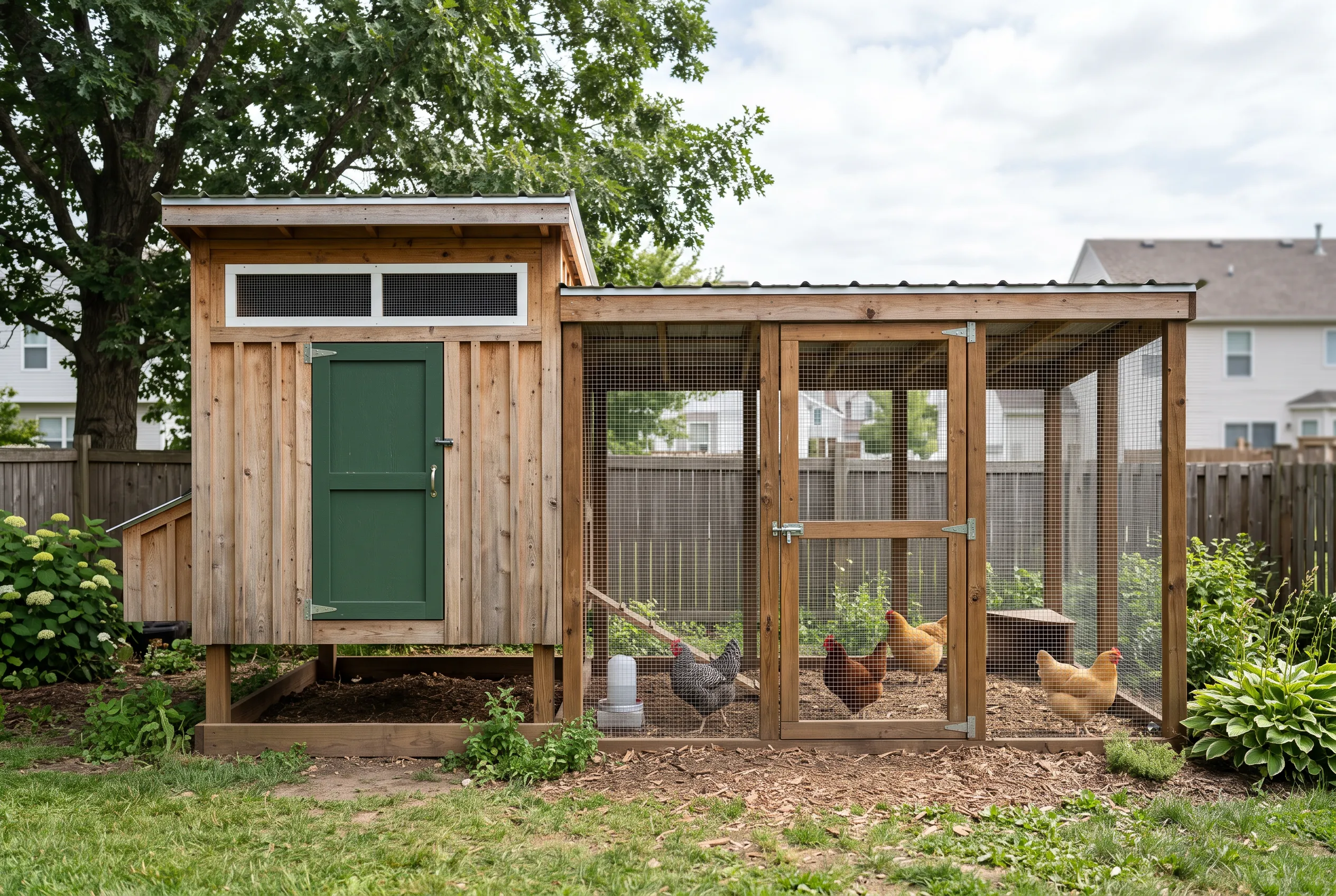
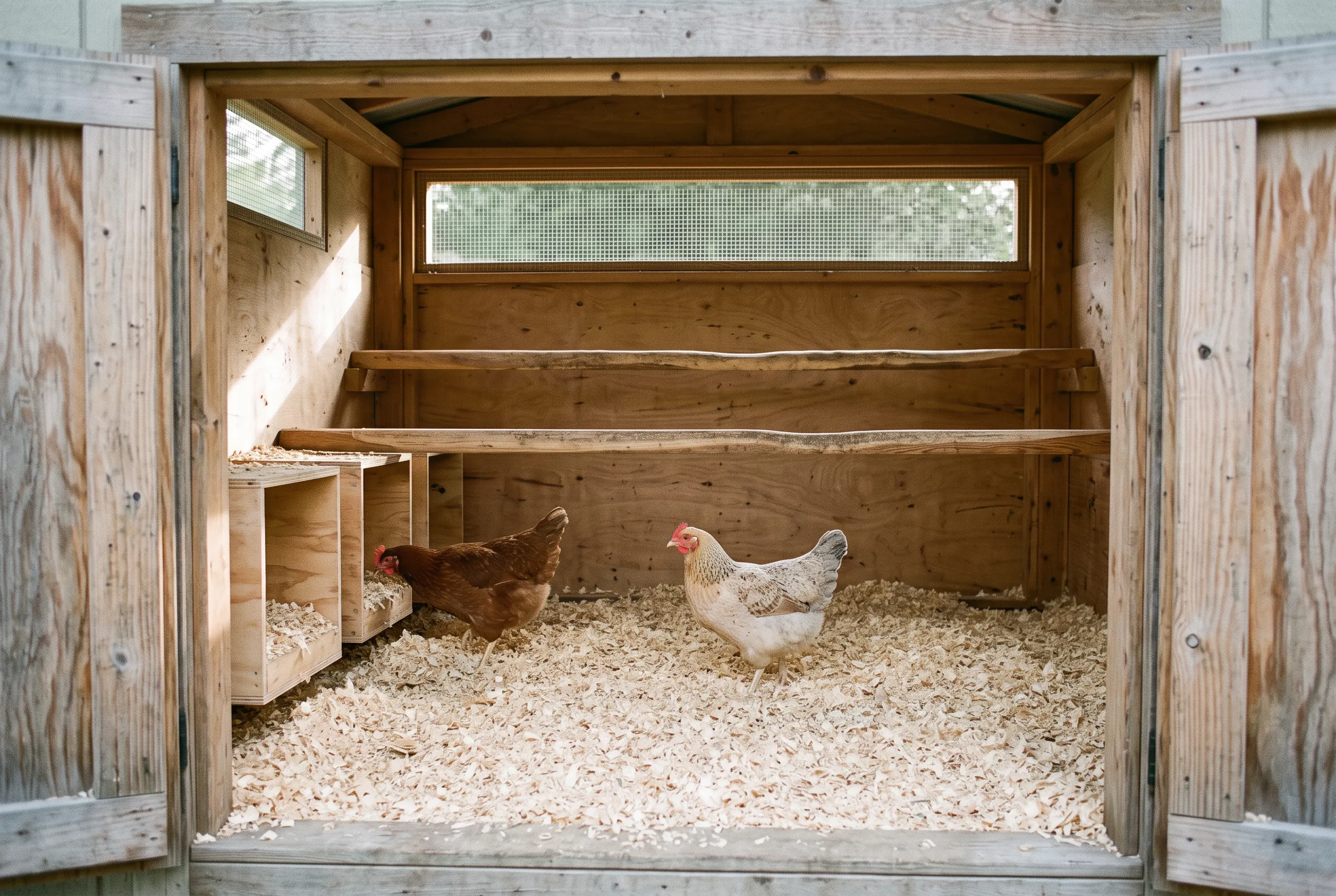
Both coop images are AI-generated illustrations created with Fal. They show general ideas and are not photographs of a tested product, verified property, or permit-ready design.
Report a correction