Hot-weather flock care
How to keep chickens cool in summer heat
Do not wait for a magic temperature. Humidity, direct sun, still air, coop design, breed, age, and health all change the risk. Build around three essentials - shade, clean cool water, and moving air - then watch the birds for the first sign that the plan is falling short.
Quick answer
- Shade that still exists in late afternoon, several points of clean cool water, and air movement are the first priorities.
- Light panting with an alert bird is an early warning; heavy panting, pallor, weakness, limpness, or collapse is an emergency.
- Misters are most useful in dry heat. In humid weather, prioritize shade and airflow and do not turn the run into wet litter.
- Cool a dangerously overheated bird with cool - not icy - water, keep the head above water, and contact a poultry veterinarian promptly.
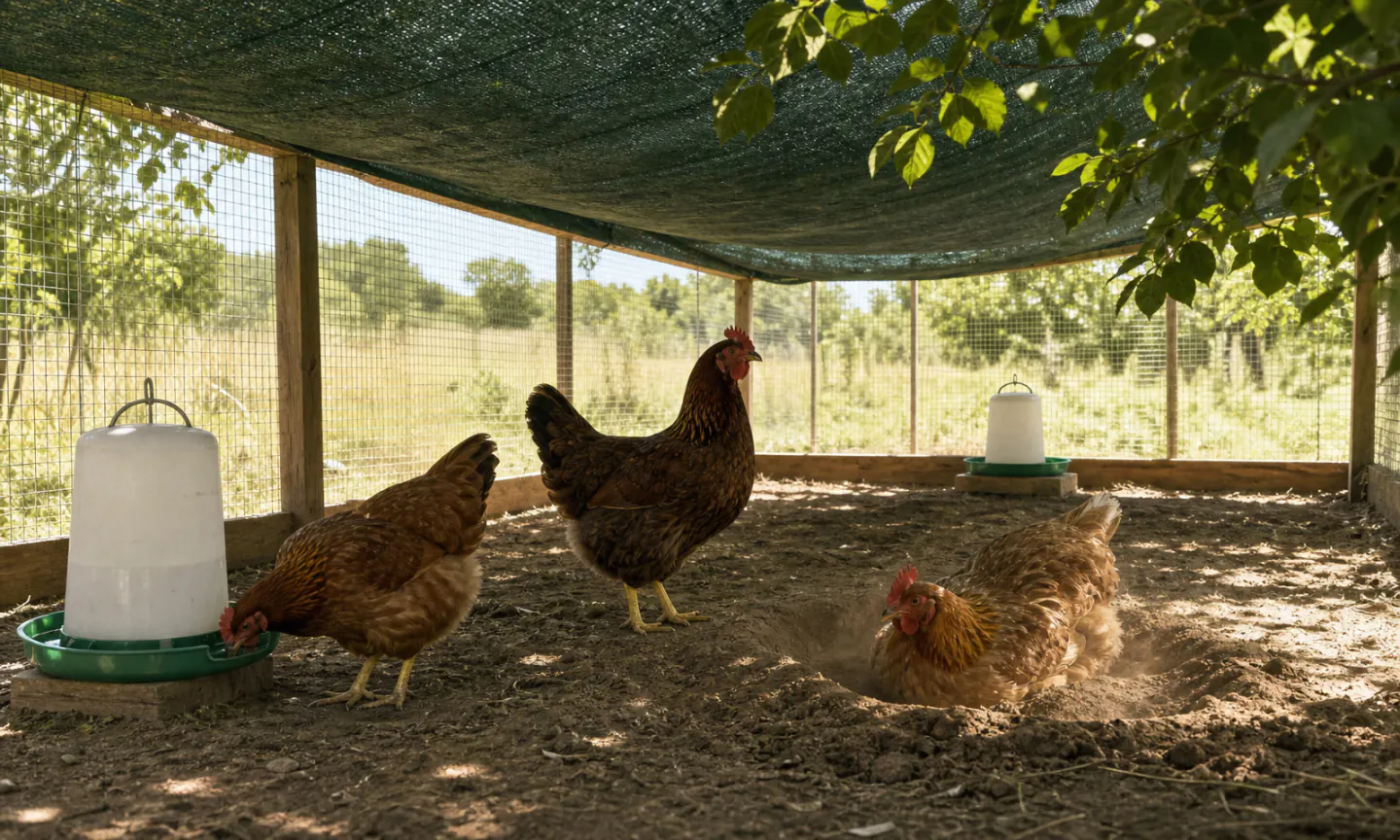
Field note · Usable shade
Is the chicken hot, stressed, or in immediate danger?
Panting is a cooling response, but it is also your cue to improve conditions. The Extension Foundation's backyard-heat guidance distinguishes an alert hen that is coping from a lethargic or limp hen in danger. Use the whole bird, not one behavior or one thermometer reading.
| What you see | What it suggests | What to do now |
|---|---|---|
| Alert, moving normally, drinking, perhaps light panting | Hot and compensating | Refresh water, verify shade and airflow, reduce activity, and recheck often. |
| Persistent or heavy panting, wings held away, crouched posture | Heat stress is progressing | Move the bird to a cooler shaded area, improve air movement, offer cool water, and watch every flock member. |
| Pale or discolored comb and wattles, marked lethargy, stumbling, limpness, or unresponsiveness | Dangerous heat exhaustion | Begin controlled emergency cooling and contact a poultry veterinarian immediately. |
Temperature matters, but it is not a universal stoplight. The University of Minnesota Extension notes that high humidity reduces heat loss from the lungs. A still, humid 90 F afternoon may therefore be harder on a flock than a drier day at the same temperature.
Build the cooling plan in the right order
1. Shade
Shade the birds and the water, then check where that shade moves at noon and late afternoon. A roof can shade while still trapping heat, so keep the shaded zone open to air.
2. Water
Provide more than one clean water point in shade. A dominant hen, tipped container, clogged nipple, or empty reservoir must not leave the flock without water.
3. Airflow
Open safe vents and move air at bird level. Passive ventilation should still work during a power failure; a fan is a supplement, not the entire heat plan.
Shade cloth, a second roof above a sun-baked coop, and vegetation can reduce solar exposure. Do not cover every side with a tarp and accidentally stop cross-ventilation. Walk into the run at the hottest part of the day: if the only shade is outside the fence or the shaded coop feels hotter than the open run, the design needs another pass.
A practical heat-wave routine
- 1
Before the heat arrives
Clean and test every waterer, freeze sealed bottles if you use them, verify late-day shade, clear blocked vents, test the fan and backup plan, and tell the backup caregiver what danger looks like.
- 2
Early morning
Top off balanced feed while temperatures are lower, fill multiple shaded waterers with fresh cool water, collect eggs, and position temporary shade before the sun reaches the run.
- 3
Hottest hours
Avoid chasing, catching, moving, or otherwise stressing the flock. Check water flow and each bird, not just the weather app. Remove a struggling bird from flock pressure.
- 4
After sunset
Make sure the coop can release stored roof and wall heat before birds roost. Refresh warm water, collect remaining eggs, and confirm the power-dependent equipment actually ran.
Fans, misters, ice, and electrolytes
| Tool | When it helps | Failure to avoid |
|---|---|---|
| Fan | Still air, enclosed shade, and a coop that remains hot after sunset | Household equipment exposed to dust, litter, pecking, water, or an unsafe extension cord. Follow the product's location and installation rating. |
| Mister | Hot, dry air where evaporation can cool a shaded zone | Adding moisture in already humid air or soaking bedding, feed, walls, and manure. |
| Frozen sealed bottle | Keeping a water reservoir cooler or providing a cool object near a resting area | Assuming one bottle replaces shade, water capacity, or ventilation. |
| Electrolyte product | A forecast heat event when used according to a poultry-labeled product or veterinary direction | Improvised concentrations, continuous use without plain water, or treating a collapsed bird only with additives. |
A solar fan can move air while the panel has useful sun, but panel shade, dust, cloud cover, motor size, and the hottest after-sunset hours can expose its limits. Judge it by measured airflow in the occupied zone and keep passive vents open. A remote camera or sensor can help verify conditions, but it cannot refill water; see the coop camera guide for monitoring tradeoffs.
Keep treats from displacing the feed hens need
Hot hens often eat less. Mississippi State Extension recommends offering the balanced ration during cooler morning hours and warns that frozen fruit or vegetable treats should not become the only food. Use a small hydrating treat as enrichment after the flock has access to its complete feed. Do not try to fix heat stress by loading the diet with scratch grain or an improvised supplement.
Egg production or shell quality may dip during a heat event as intake changes. That is a reason to protect water and balanced-feed consumption, not to force-feed calcium or protein. The backyard chicken feeding guide explains feed, grit, and oyster shell separately.
Frequently asked questions
At what temperature do chickens get heat stress?
Should I put ice in chicken water?
Can I run a fan in a chicken coop?
Are misters good for chickens?
Does frozen watermelon prevent heat stroke?
Should an overheated chicken go into ice water?
Sources checked
Heat-risk, warning-sign, cooling, water, feed, fan, and mister guidance was checked against current Cooperative Extension material on August 9, 2026.