Breed selection
How to choose chicken breeds for your climate
Climate suitability is a filter, not a winner. Start with the weather your coop must handle, then narrow by egg goals, flock space, temperament, and the specific strain a breeder actually sells.
Quick answer
- Choose for your hardest season, not your average day.
- Coop ventilation, shade, dry footing, water, and frost protection matter as much as breed labels.
- Ask whether the seller’s strain is selected for production, exhibition, or preservation.
- Do not combine birds with extreme size or temperament differences without a management plan.
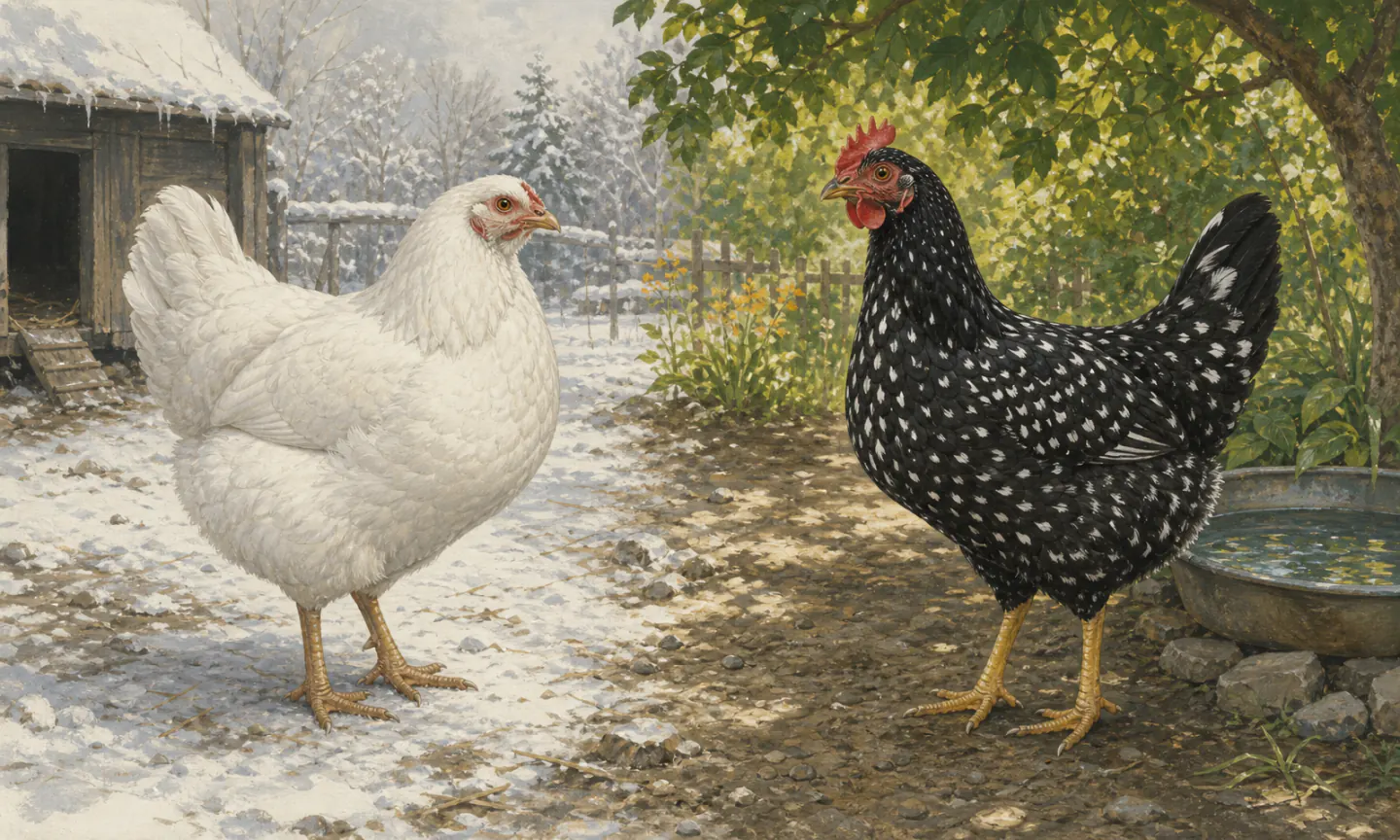
Field note · Traits, not labels
Choose in this order
- 1Name the hardest local condition: prolonged heat, humidity, deep cold, wet winters, or large daily swings.
- 2Audit the housing you can provide: shade, airflow, dry litter, protected water, winter ventilation, and emergency backup.
- 3Choose the job: eggs, meat, dual purpose, brooding, preservation, exhibition, or family flock.
- 4Filter for adult size, activity level, flightiness, broodiness, comb and foot feathering, and mixed-flock compatibility.
- 5Ask the hatchery or breeder about the actual strain’s mature weight, production focus, temperament, and local performance.
Climate shortlist
| Breed | Climate starting point | Why it makes the list | Typical role |
|---|---|---|---|
| Chantecler | Cold | Small combs and a breed history tied to Canadian winters | Dual purpose |
| Brahma | Cold | Large body and heavy feathering; feathered feet need dry footing | Dual purpose |
| Plymouth Rock | Broad | Common dual-purpose starting point; source and strain still matter | Eggs and meat |
| Rhode Island Red | Hot and cold | Widely adapted; production and temperament vary by strain | Strong egg emphasis |
| New Hampshire | Broad | Selected for faster maturity and growth from Rhode Island Red stock | Dual purpose |
| Ancona | Warm | Light Mediterranean type; active and better suited to space | Eggs |
This shortlist synthesizes the Livestock Conservancy comparison and breed histories. It is intentionally small. “Cold hardy” does not mean frost-proof, and “heat tolerant” does not remove the need for shade, airflow, and cool water.
Match traits to housing
Large combs in cold climates
Can require closer frostbite prevention through dry housing and ventilation that controls moisture without drafts at roost level.
Heavy feathering in heat
Raises the importance of shade, airflow, low stocking density, and multiple water stations.
Feathered feet in wet ground
Need dry litter and run footing because mud and ice cling to foot feathers.
Active, light breeds on small lots
May need more run complexity, taller fencing, and neighbor-aware placement.
Frequently asked questions
What is the best chicken breed for cold weather?
What is the best chicken breed for hot weather?
Can I mix different chicken breeds?
Sources checked
Breed-history and climate-fit claims were checked against breed-conservation and university-extension sources on August 7, 2026. The table is a planning shortlist, not a guarantee for every strain.