Rodent prevention
Do chickens attract rats?
Chickens are not the main attraction. Rats move in when a coop supplies reliable feed, water, shelter, waste, or eggs. Remove those rewards and close the routes they use.
Quick answer
- Accessible feed is usually the strongest coop attractant.
- Store feed in tight, rodent-resistant containers and clean spills every day.
- Close gaps, remove hiding places, collect eggs, and fix dripping water.
- Use a camera to verify activity; call a licensed pest professional when the infestation exceeds safe DIY control.
What attracts rats to a chicken coop
Berkeley’s public-health guidance is direct: rodents are attracted by chicken feed and water, not by the birds themselves. A coop can also supply quiet shelter, nesting material, spilled grain, kitchen scraps, eggs, and insects around waste.
Feed
Open ports, overnight feed, scratch grain in litter, torn bags, and spilled pellets.
Water
Drips, open containers, poor drainage, and standing water under the coop.
Shelter
Gaps, wall voids, stacked materials, dense vegetation, and clutter beside the run.
Other food
Uncollected eggs, unsecured trash or compost, and feed-contaminated bedding.
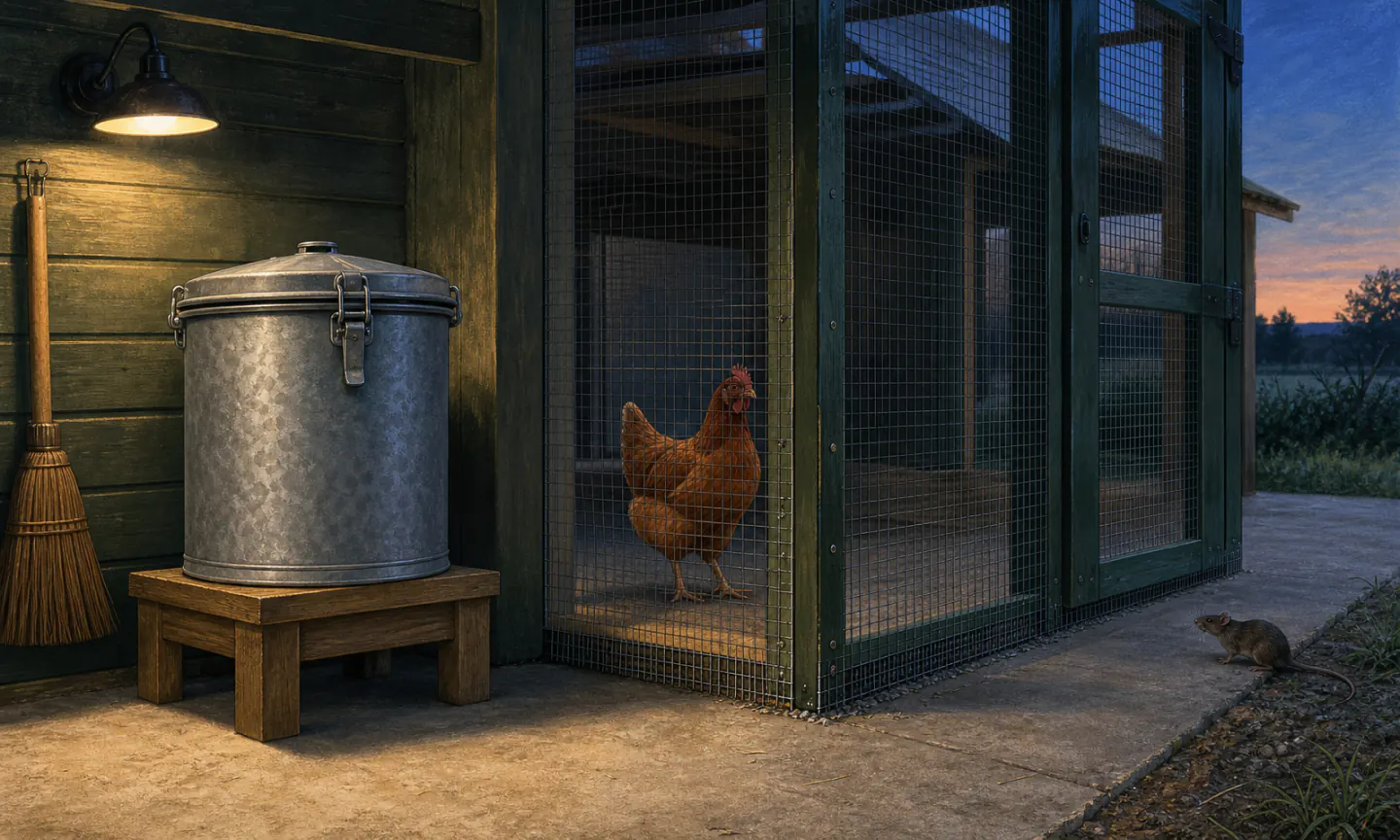
Field note · Remove the reward
A five-part rat-prevention routine
- 1Store bagged feed inside a tight-lidded rodent-resistant container and clean every spill before night.
- 2Use a covered feeder appropriate for the flock, repair leaks, and remove feed access at night without depriving birds during waking hours.
- 3Seal entry gaps with durable materials, protect vents with correctly installed hardware cloth, and inspect where walls meet floors and roofs.
- 4Collect eggs frequently, remove wet litter, manage manure, trim hiding cover, and keep stored materials away from the coop walls.
- 5Look for droppings, gnaw marks, burrows, rub marks, and tracks; point a night-vision camera at suspected routes and the feeder.
A treadle feeder can reduce access, but it cannot correct a torn feed bag or grain scattered in bedding. Compare the current options in the chicken feeder guide.
Monitor without guessing
Frame a camera low enough to see the feeder base, wall junctions, and likely travel edges. Review several nights, then close the confirmed routes and repeat the check. Camera status is evidence of activity, not a complete control method.
When traps or pesticides are considered, protect poultry, pets, children, and wildlife and follow the product label and local law exactly. A professional is appropriate when you cannot identify the nest or entry points, activity continues after sanitation and exclusion, or safe placement is not possible.
Frequently asked questions
Do chickens keep rats away?
Should chicken feed be removed every night?
Do rats eat chicken eggs?
Sources checked
Rodent-attractant, sanitation, and flock-safety claims were checked against public-health and university-extension sources on August 7, 2026.