Chick care guide
Chick brooder setup: heat, space, feed, and water
Set the brooder up before the chicks arrive, measure temperature at chick height, and give them room to choose warmer or cooler zones. Their distribution tells you whether the setup is working.
Quick answer
- Set up and test the brooder at least a day before chicks arrive; Penn State recommends 48 hours.
- Start near 95°F at chick height in week one, then reduce about 5°F weekly while watching behavior.
- Provide a heat gradient so chicks can move away from the warm zone.
- Use chick starter, a chick-sized feeder, and a shallow poultry waterer—not an open deep dish.
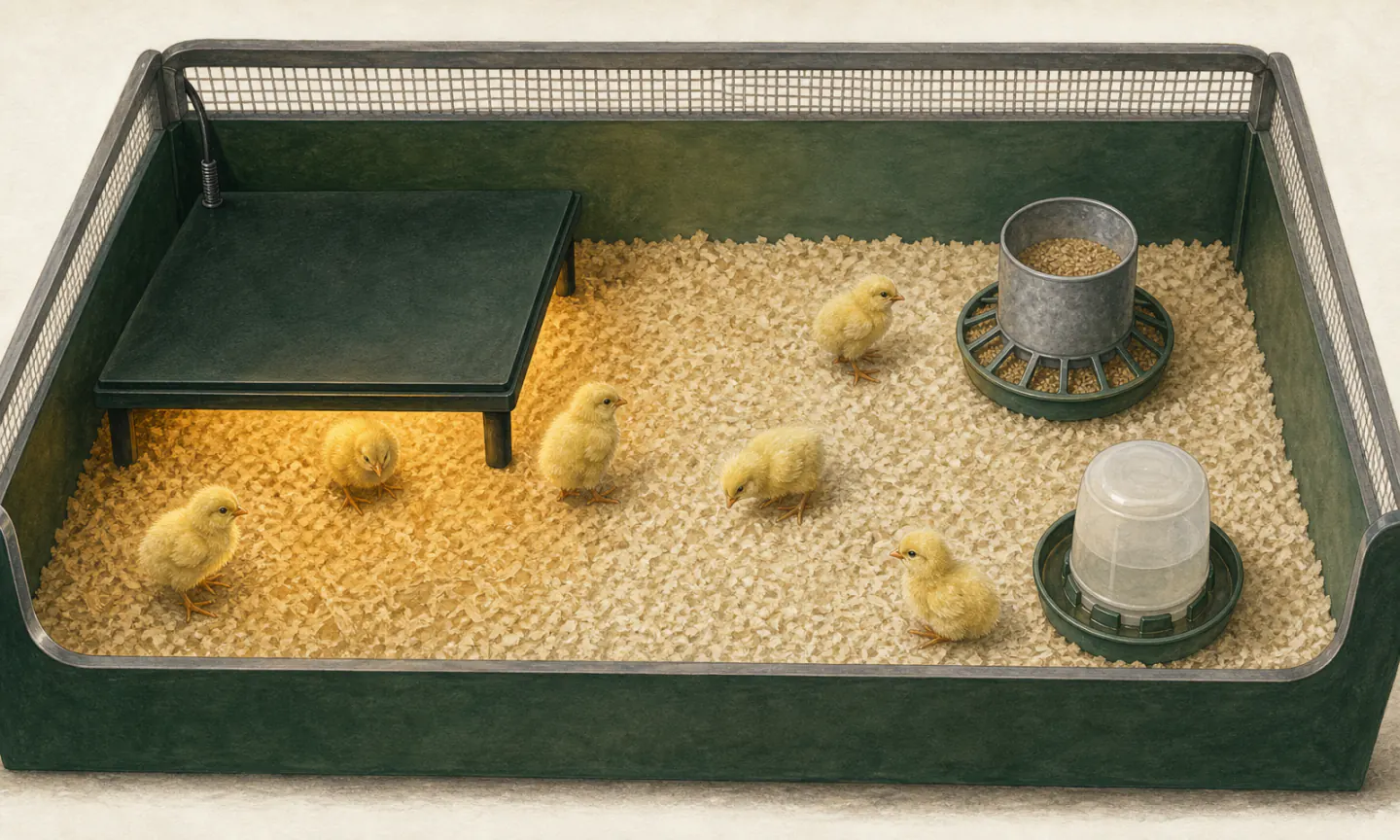
Field note · Heat gradient
The setup checklist
Brooder walls
Draft protection, ventilation, enough height, and no gaps where chicks can become trapped.
Heat zone
An approved, securely installed heat source over only part of the brooder.
Floor and litter
Dry, non-slip footing; Penn State suggests paper towels over newspaper for the first days.
Feed
Complete chick starter in a stable, age-appropriate feeder.
Water
Clean chick waterer on stable footing, away from the hottest area and checked often for wet litter.
Monitoring
Thermometer at chick height plus direct observation several times daily.
Temperature is a starting point; behavior is the check
Penn State recommends about 95°F at chick level for the first week, reducing the temperature about 5°F each week until roughly 62–65°F. Measure where the chicks stand, not at ceiling height.
| Chick pattern | Likely message | Response |
|---|---|---|
| Evenly spread, eating, drinking, resting | Comfortable | Keep observing |
| Packed under heat, loud distress calls | Too cold or drafty | Check measured temperature and drafts |
| Avoiding heat, panting, wings held out | Too hot | Reduce heat safely and verify ventilation |
| Crowded to one side | Draft, uneven heat, noise, or another disturbance | Inspect that side and the whole room |
The first 48 hours
- 1Run the empty brooder long enough to stabilize and correct hot, cold, damp, or drafty areas before arrival.
- 2On arrival, place chicks near water and confirm they begin drinking and finding starter feed.
- 3Check chick distribution frequently, including after room-temperature changes and overnight.
- 4Replace wet or contaminated litter immediately and clean the waterer without carrying poultry equipment into food areas.
- 5Watch each chick for eating, drinking, mobility, and normal breathing; contact a poultry veterinarian or extension professional about sick or failing chicks.
Frequently asked questions
Can chicks drown in a waterer?
Is a brooder plate safer than a heat lamp?
Can chicks eat layer feed?
When can chicks leave the brooder?
Sources checked
Brooding, heat, feed, water, and fire-safety claims were checked against current university-extension guidance on August 7, 2026.