Coop layout
Why does a chicken coop have two doors?
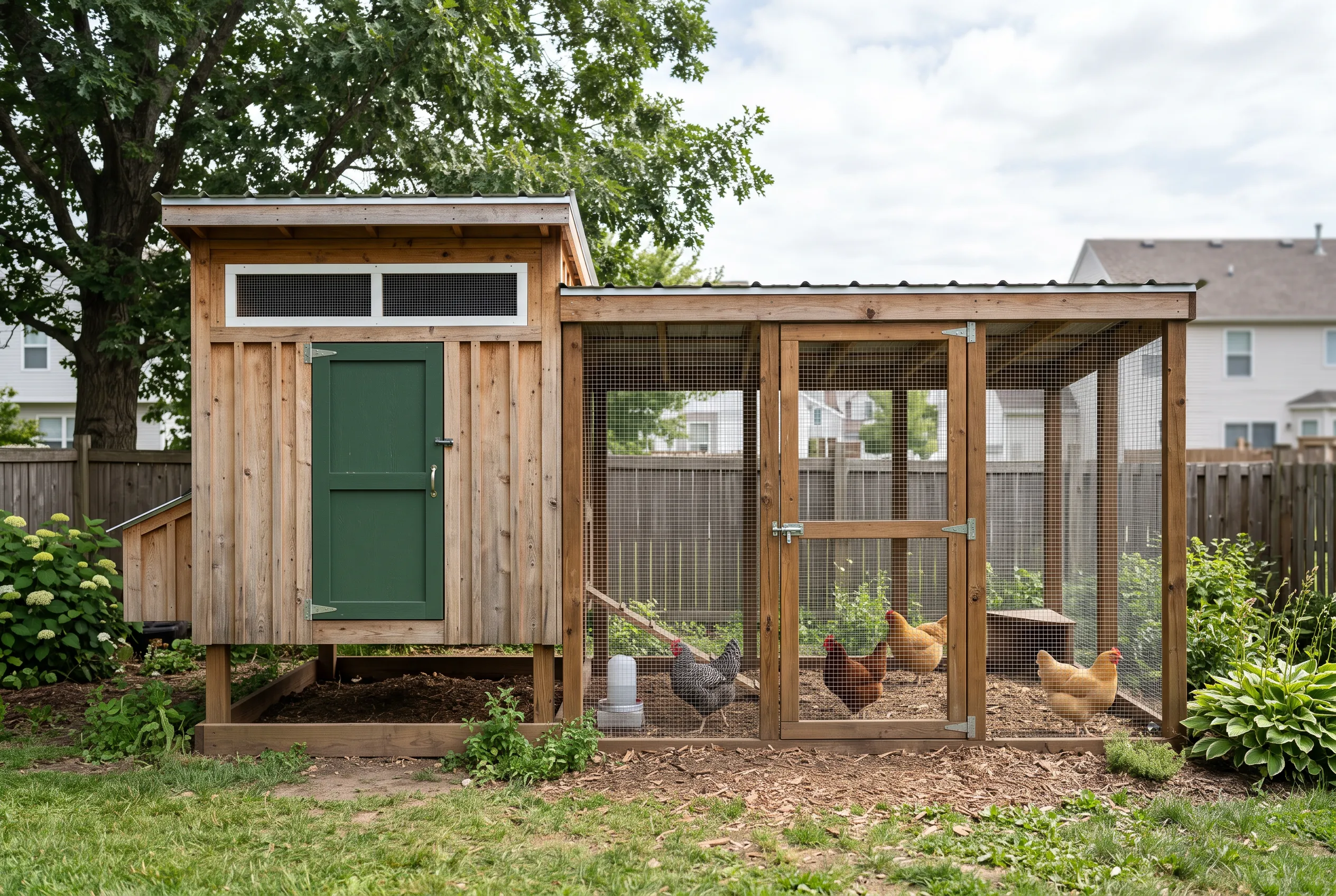
Usually, one door is for the chickens and the other is for you. A small pop-hole gives hens a route to the run; a larger service door lets you clean, inspect the flock, and reach equipment. On a compact coop, the second opening may be a removable cleaning panel instead.
Quick answer
- Identify each opening by its job before buying hardware.
- Keep human access usable when the chicken door is closed.
- A run gate and nest-box hatch need their own secure closures.
This question also has a riddle answer: with four doors, it would be a sedan. The wordplay is on coop and coupe. For a real chicken house, the useful distinction is between the small bird entrance and the larger opening that lets you care for the flock.
Plan the access
Name the openings before you count them
A coop listing might count a nest-box lid as a door, while a builder means a full-height entrance. That difference matters when you picture yourself removing wet bedding in February. Look at the floor plan and photographs, then label every opening by what passes through it.
- Hen pop-hole
- The small passage between the sleeping coop and the outdoor run. This is usually the opening fitted with an automatic chicken door.
- Human or service door
- An entrance or large panel for reaching birds, lifting out equipment, and removing bedding.
- Nest-box hatch
- An egg-collection opening. It may save a walk through the run, but it rarely replaces access to the whole floor.
- Run gate
- An entrance to the outdoor enclosure. Closing the coop pop-hole does not close this gate.
Poultry Extension recommends designing for access to nests, perches, feeders, and waterers. Use that as the test of a useful door arrangement. An extra hatch earns its place when it makes a necessary task easier.
Walk through a cleaning day on paper
Draw the open service door, the bucket you will carry, and the route to your compost or disposal area. Check whether the door hits a fence, a waterer, or the automatic pop-hole panel. For a raised coop, consider how you will reach the far corner without leaning your weight on a lightweight hatch.
Next, compare the opening with the largest removable item: a dropping board, a nest insert, or a feeder. A door wide enough for a person to look through may still be too narrow to remove that item without taking the coop apart. Check the width with the door fully open, including protruding latches and hinges.
Here is an illustrative layout test: imagine a wheelbarrow parked outside the service entrance while the hens use the run. Can you scoop bedding into it, shut the coop securely, and leave without moving the wheelbarrow twice? If every task blocks another opening, reposition the access before adding an automatic door.
Two hen doors are a different design choice
Some coops have two small chicken entrances rather than a human door and a pop-hole. They might lead to separate runs or support a particular management layout. Two openings do not automatically mean the coop can house more birds. Floor area, roosts, ventilation, and access to resources still need their own assessment.
When both entrances reach the same run, plan how you will confirm that both are secure at night. Automating one and forgetting the second leaves the enclosure incomplete. If you divide the run later, check which birds can reach water and shelter on each side before changing the door routine.
Keep airflow separate from nighttime access
A service door propped open during cleaning is useful temporary access. It should not be the only way your coop gets fresh air. University of Minnesota Extension explains that air exchange removes moisture and ammonia. Plan protected ventilation that still works when all animal and human entrances are shut.
During your evening check, include the nest lid, service door, run gate, and pop-hole. Look for an opening hidden behind equipment and for a latch you can reach while wearing gloves. The window and ventilation guide covers the separate question of managing air without leaving an unsecured entrance.
Sources checked
Sources checked September 23, 2026. Product guidance is based on published documentation, with unresolved details identified in the text.