Egg health guide
Why did my chicken lay a soft egg?
One soft egg can happen while a young hen’s laying system is settling in. Repeated soft eggs deserve a closer look at feed, stress, age, and flock health.
Quick answer
- A soft-shelled egg has a thin, flexible shell; a shell-less egg has only its membranes.
- An isolated abnormal egg is not proof of calcium deficiency.
- Keep a complete layer ration available and avoid guessing at supplement doses.
- Repeated cases or a sick hen call for a poultry veterinarian or extension professional.
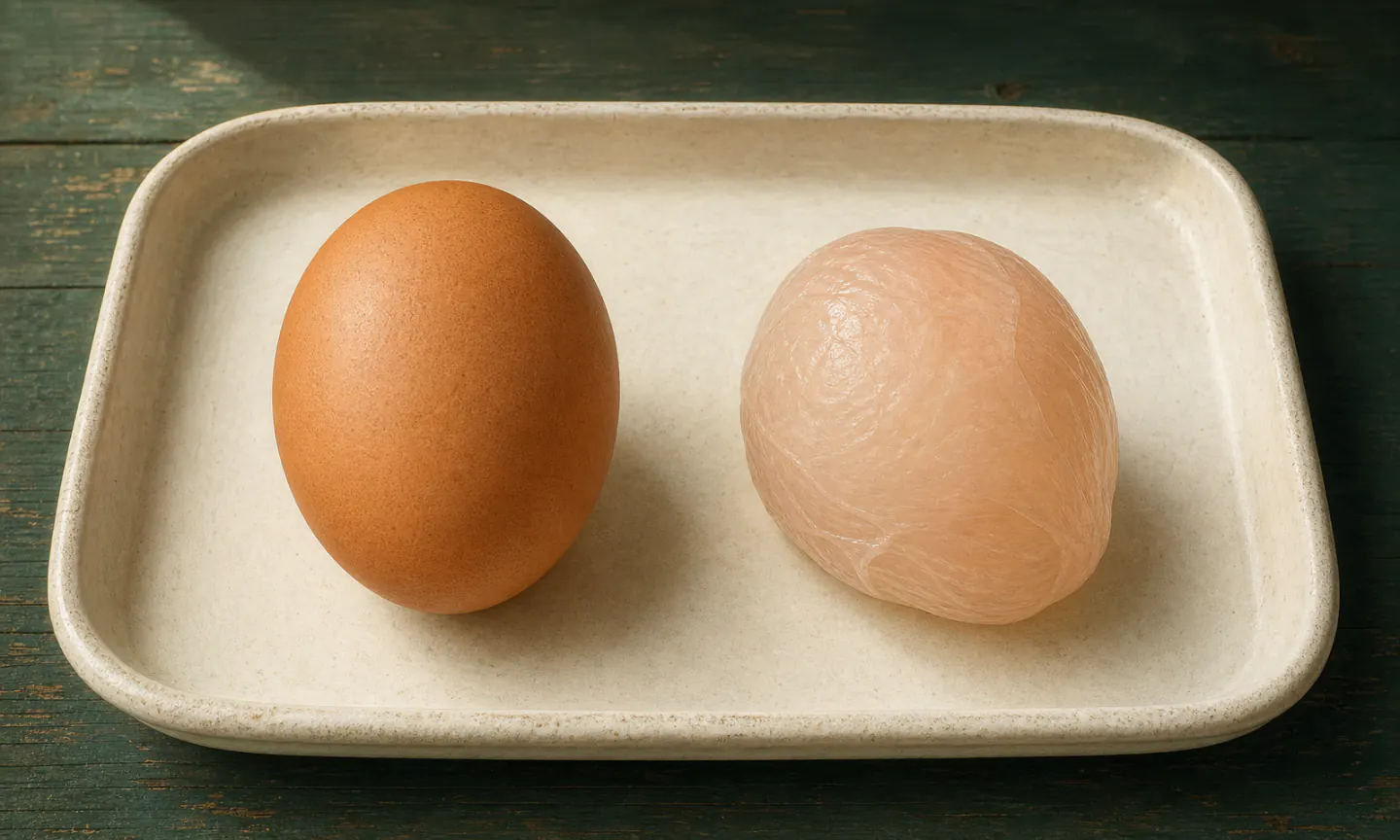
Field note · Shell or membrane
Soft shell or no shell?
The University of Georgia distinguishes a soft-shelled egg, whose shell is incompletely formed, from a shell-less egg, which is covered only by the inner and outer shell membranes. That distinction helps you describe the problem, but the home response is the same: observe the hen and flock before assuming a single cause.
| Pattern | What it can suggest | Next step |
|---|---|---|
| One egg from a new layer | An immature shell gland or an early laying irregularity | Monitor and confirm complete feed and water |
| Repeated eggs from one hen | Nutrition, stress, age, or a reproductive problem | Record the pattern and seek expert guidance |
| Several hens affected | A shared feed, water, environmental, or infectious problem | Contact a poultry veterinarian or extension service promptly |
What to check today
- 1Identify the likely hen and note whether she is a new layer, older bird, or showing any other change.
- 2Confirm that the flock’s main food is a complete ration labeled for laying hens—not scratch grain or treats.
- 3Check that clean water is continuously available and that feed is dry, fresh, and free of mold.
- 4Look for recent stressors such as heat, a predator visit, relocation, bullying, or a major flock change.
- 5Collect eggs frequently, discard cracked eggs, clean the nest area, and write down any recurrence.
Calcium is necessary for shell formation, but not every soft egg is a calcium problem. The Merck Veterinary Manual also lists stress and viral disease among causes of shell defects. Do not replace the balanced ration with homemade dosing; ask a qualified poultry professional when the pattern persists.
Can you eat a soft egg?
A damaged or poorly formed shell does not provide normal protection. The CDC advises discarding cracked eggs, collecting eggs often, refrigerating them, and cooking eggs until both white and yolk are firm. The conservative choice is to discard a soft-shelled or shell-less egg rather than eat it.
Clean, well-bedded boxes also make abnormalities easier to notice. See the nesting box buyer guide for washable and roll-away formats.
Frequently asked questions
Does a soft egg always mean my hen needs more calcium?
Why do pullets lay shell-less eggs?
Should I give oyster shell?
Sources checked
Husbandry and egg-safety claims were checked against veterinary, government, and university-extension sources on August 7, 2026.